

In speaking, as in listening, it is important to “understand English as it is.
When to hear English
Ideally, when you hear English, you should be able to image it as it is. For example, “He is a good tennis player.” When you hear this statement, you can understand it in two ways
① Through Japanese (for beginners)
Hear English ⇒ Understand in Japanese ⇒ Imagine the situation
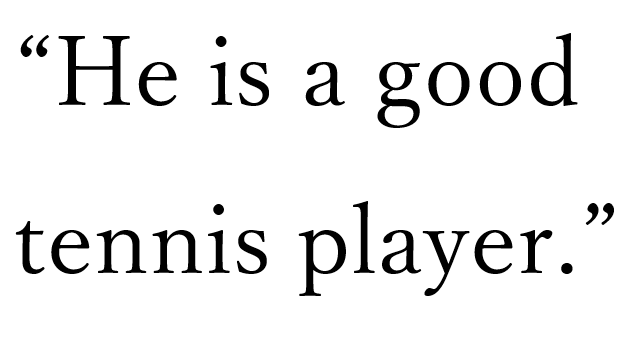 ⇒
⇒ 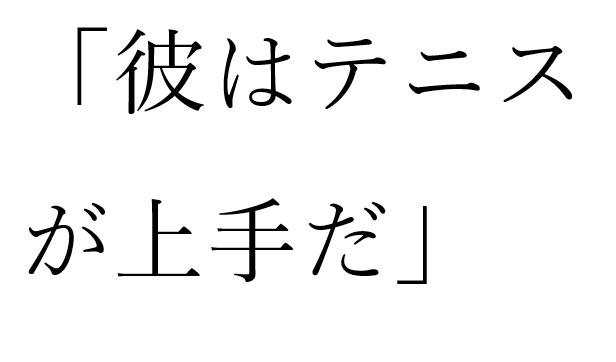 ⇒
⇒ 
② How to image directly (ideal form)
Hear English ⇒ Imagine the situation
⇒
The goal is for beginners to be able to use method①, but eventually to be able to understand English using method②.
When to speak English
There are also two ways to speak English
① Think in Japanese and then convert it to English (for beginners)
Imagine the situation ⇒ Think in Japanese ⇒ Convert it into English
⇒ ⇒
② Speak directly in English (ideal)
Imagine him playing tennis ⇒ Translate the image directly into English
⇒
To learn to speak English smoothly, it is important to move from stage ① to ②. To do so, Instant Englsih Composition is effective.
Instant English Composition
Instantaneous English composition is training to immediately change Japanese sentences into English and say them out loud. By continuing this practice, you will be able to speak English smoothly. It is especially useful for English composition for high school and university entrance exams, as well as for preparing for the English Proficiency Test and TOEIC SW (Speaking and Writing) exam.
Tips for Instantaneous English Composition
As a beginner, you tend to convert Japanese into English one word at a time.
✖ Bad examples
- 彼は ➡ He
- 〜です ➡ is
- 上手な ➡ good
- テニスをする人 ➡ a tennis player
This way, it takes a long time to speak.
〇 Good examples
- Imagin “He is a good tennis player ”.
- Render into English “He is a good tennis player.”
In other words, the “image → English” flow is also important when speaking English.
Develop the habit of “Japanese → Image → English“
When practicing instantaneous English composition, it is important not to use Japanese as a mere translation tool.
Instead of translating the Japanese one word at a time, be aware of the need to translate images into English.
For example:
- When you see the sentence “He is a good tennis player,” imagine him playing tennis
- Express that image in English ➡ “He is a good tennis player.”
If you are conscious of speaking while “picturing” English in this way, you will be able to speak English without using Japanese.
Why Instantaneous English Composition is Effective
If you continue this training, you will be able to respond to a variety of situations.
By imagining various situations and translating them into English, you will be able to broaden your range of expression.
Summary
- Get into the habit of understanding English with “images”.
- In instantaneous English composition, do not translate one word at a time, but use the whole image in English.
- Once you acquire the flow of “Japanese → Image → English,” you will be able to speak English without using Japanese.
The above will enable you to speak English without Japanese.
Even beginners can learn to speak English smoothly by continuing to practice instantaneous English composition little by little every day!